
Are we human?
On the Fragile and Conditional Nature of Humanity

What does it mean “to be human”?
Last year, a professor posed this question, and ever since, I’ve been unable to shake it. At first, it seemed absurd—what kind of question is that? To be human—it feels as though the answer should be self-evident. And yet, it isn’t.
Who is a human? What is the human?
Humanity —whether as a status, qualifier, or adjective— is not just a biological fact but a social designation, one that history has repeatedly shown to be transient, conditional, and politically motivated. The definition of “human” is not fixed; rather, it has been used as a boundary—one that determines who belongs in our world and who does not.
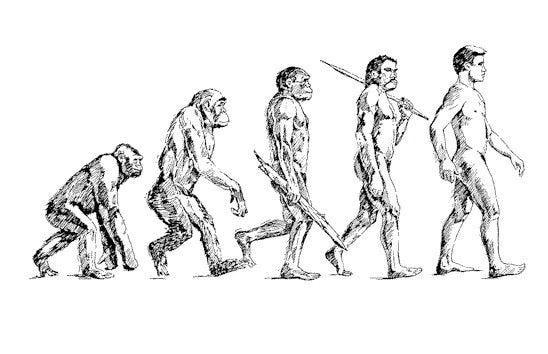
In theory, we are all human. Biologically, we share the classification Homo sapiens sapiens—a title that itself implies a fundamental and universal condition for all of such species. Yet, this notion is lost in the social construction of our world, where reality is shaped by politics, culture, and bias rather than genetics alone.
Nonetheless, attempts to define “the human” have long been a part of history. One of the most famous (and comically flawed) attempts comes from ancient Greece. It is said that Plato defined a human as a “featherless biped.” The philosopher Diogenes, unimpressed, plucked the feathers from a chicken, presented it to Plato’s school, and proclaimed, "Here is Plato’s man."
As ridiculous as this may seem, it reflects a deeper truth: defining what is human has always been more difficult than defining what is not. Linguistically, every definition creates an opposite. To define what is human is to establish what is not. And here is where the inhuman emerges.
History has shown that it is far easier to label a group as inhuman than to define what it truly means to be human. Entire populations have been systematically excluded from humanity—Jewish people under Nazi rule, Black people under slavery, women for most of recorded history. Not too long before the Universal Declaration of Human Rights, Black Americans were still legally considered only three-fifths of a person (that’s just a little over half a person). These exclusions were not incidental; they all occurred because someone, somewhere, decided certain people weren’t human enough.
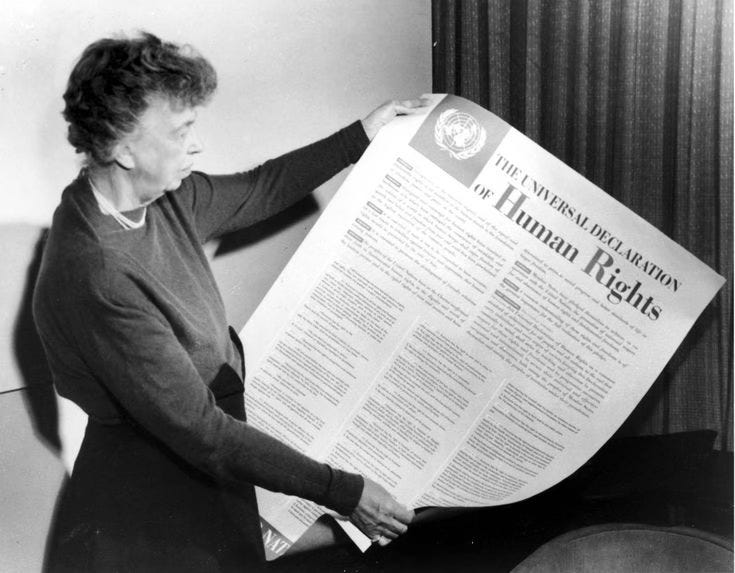
After World War II, the world attempted to codify humanity into law, as if a declaration could undo centuries of dehumanizing exclusion. Thus, the 1948 Universal Declaration of Human Rights aimed to establish universal protections, asserting that all Homo sapiens sapiens are equally human. And furthermore it argued that this indisputable humanity granted them a series of protections; of rights.
Yet, more than 70 years later, we are no closer to defining what it means to be human beyond what is not inhuman. Despite these supposed universal rights, humanity—and the privileges that come with it—remains neither universally accessible nor standardized. Because despite the grand proclamations, humanity is still conditional; a privilege, not a guarantee.
Consider how nowadays, language reveals the persistence of dehumanization. Undocumented immigrants are called aliens and invaders. Legally, alien remains the accepted term in U.S. immigration law, but words are never just words. Once a person is labeled as something less than human, the treatment follows naturally.
Dehumanization rarely stops at language. When people are called rats, they are treated like vermin. When people are called illegals, their existence itself becomes a crime. Normalizing violent language is the first step to normalizing a violent culture.
Even when we know dehumanization is wrong, it remains deeply ingrained in our culture. Consider the Kit Kat Club’s staging of Cabaret. The musical critiques mass dehumanization, most notably in the song If You Could See Her, where the Emcee sings about his love for a gorilla—only to reveal, in the final line, that the gorilla represents a human being, culturally dehumanized.
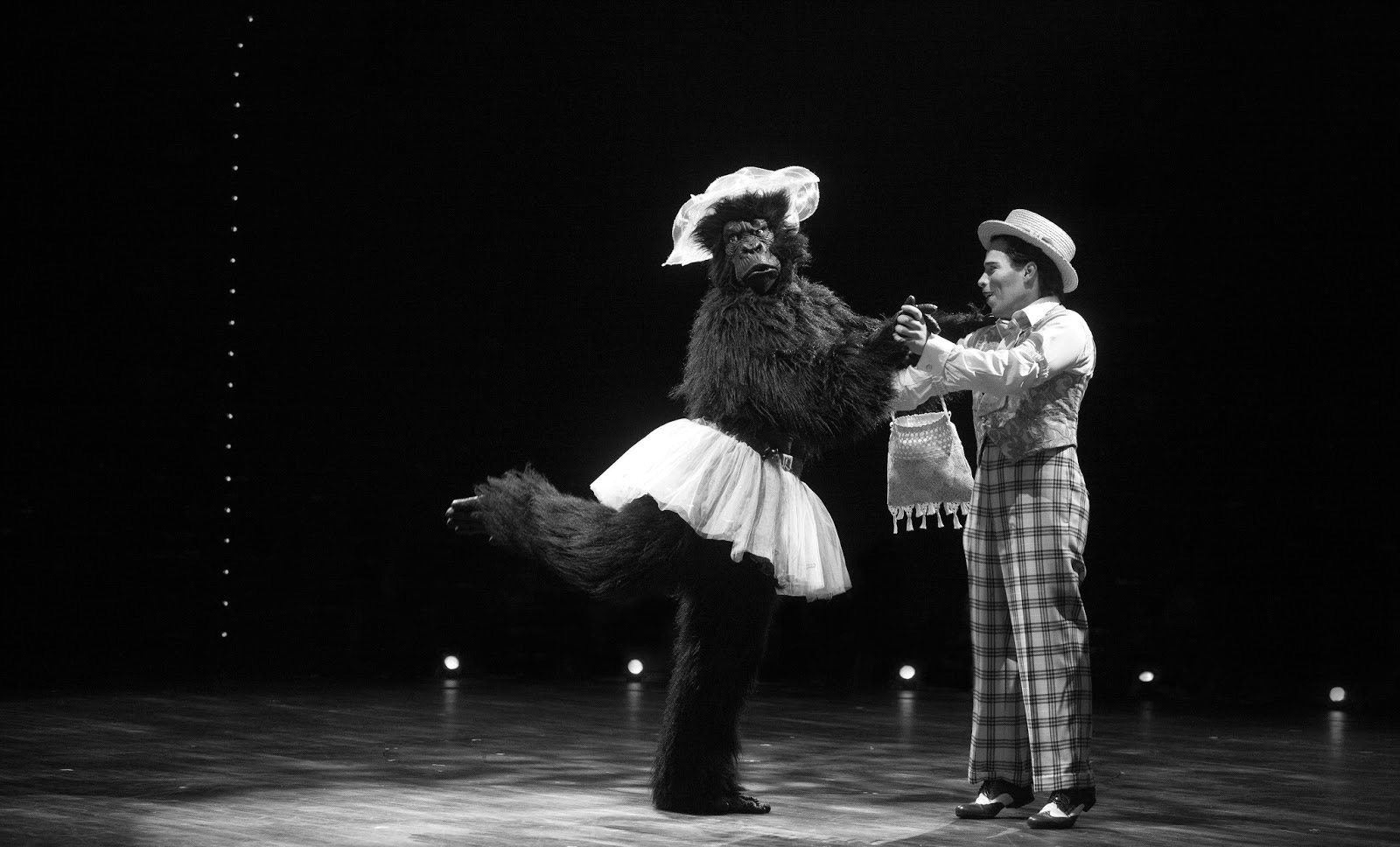
Traditionally, this moment shifts the audience’s laughter into discomfort and guilt. Yet, in Adam Lambert’s recent performance of the role, the audience continued laughing—past the reveal, past the point where humor should have turned to horror. Breaking character, he called them out: "No, no, no, no. This isn’t comedy. Pay attention." Some argued his reaction defeated the song’s purpose, but in reality, it underscored a darker truth: dehumanization is so ingrained in our culture that even when we recognize it, we still participate in it.
Passivity has always been dehumanization’s enabler
Dehumanization isn’t always an act of aggression; sometimes, it is the absence of resistance. It is the silence that allows injustice to fester. We allow equality to become a dream and separatism to bloom before our eyes.
"All… are equal, but some are more equal than others."
– George Orwell, Animal Farm
If humanity is something we have to prove, if it is something we have to earn, if it is something that can be taken away—then what does it even mean?
Perhaps this is why my professor refused to allow the phrase “human experience” in his seminar. At the time, I dismissed it as academic eccentricity. But now, I understand. If we cannot define what it means to be human, how can we claim there is a singular, universal experience of being so?
Our perception of what it means to be human is skewed. It is not simply a label or a species categorization. Humanity should not be a label that divides, excludes, or justifies harm. It should not be a privilege granted by the powerful or an identity that must be constantly defended.
We need to redefine what it means to be human. Beyond being a strippable label, humanity should be a truth that ties us together—not something that separates us as we attempt to mold and modify who gets to belong.
Our humanity is our mortality—how we are born, how we age, how we grieve, how we love. It is heartbreak and resilience. It is the art we create and the world we build.
We are human—not because we have proved it, but because we are.
i have tears swelling up in my eyes reading this today. you are a beautiful human.
Me ha gustado mucho tu escrito y las citas! Es un tema súper necesario de tratar y que no es tan fácil aclarar como parece. Justo en la facultad hace pocas semanas estuvimos debatiendo esta cuestión. Qué es, en sí, la esencia humana?
Tienes nueva suscriptora jajsjs 😊